General Benedict Arnold, one of the most notorious figures in American history, lies buried not in his native Connecticut but in the crypt of St Mary's Church in Battersea. The former Continental Army officer, whose name became synonymous with treason in the United States, died in London on June 14, 1801, and was interred alongside his wife Margaret "Peggy" Shippen and their daughter in the church's crypt.
The Church and Its Notorious Resident
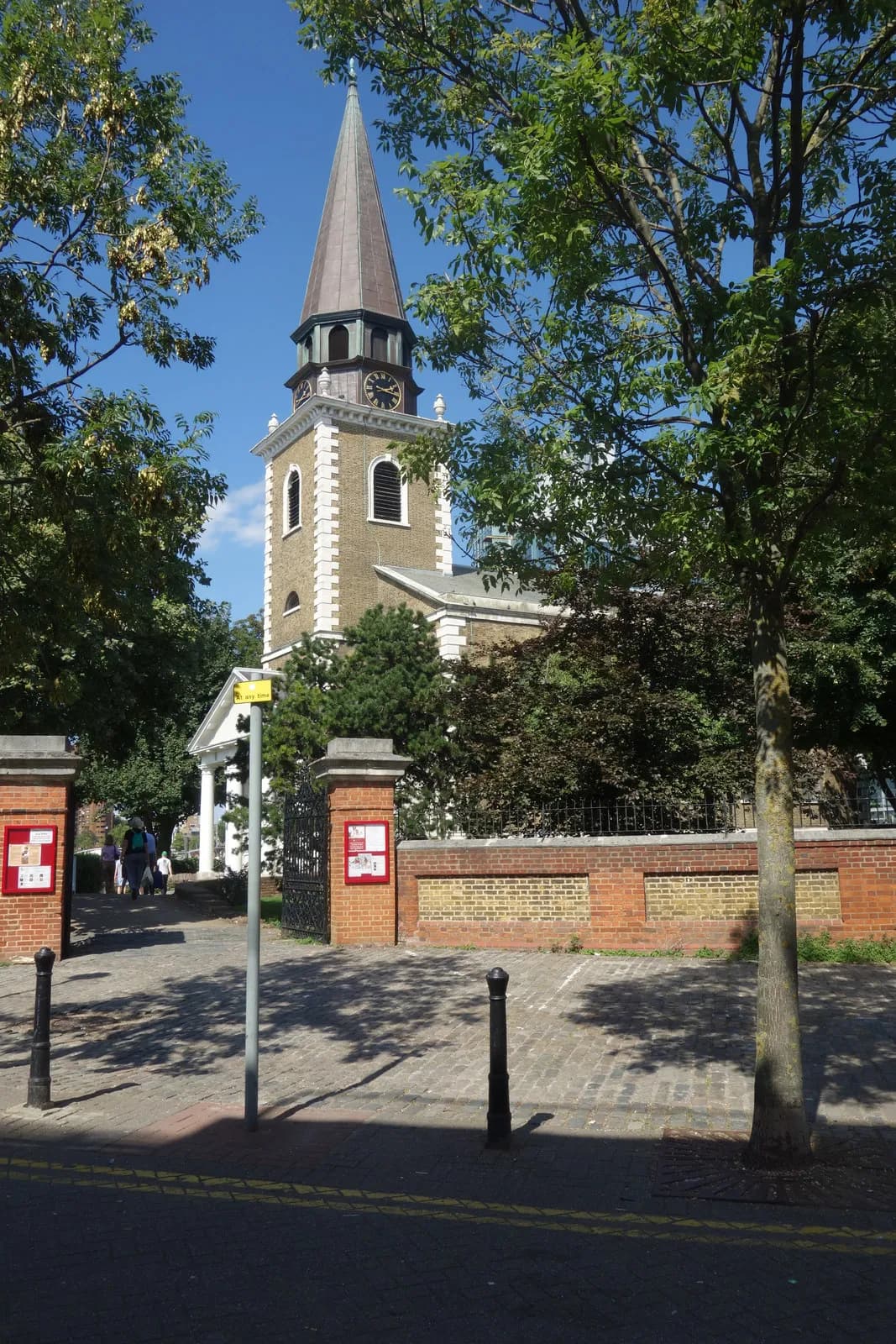
St Mary's Church stands on Battersea Church Road, within the London Borough of Wandsworth, on a site where Christians have worshipped continuously since approximately 800 AD. The present Grade I listed building, completed in 1777 and designed by local architect Joseph Dixon, would have been newly constructed when Arnold first arrived in London in the winter of 1782.
The church's brown brick exterior, stone quoins, and distinctive octagonal wooden steeple represent Georgian ecclesiastical architecture at its finest. The tetrastyle Doric pedimented porch and west tower with cyma-bracketed cornice contribute to its architectural significance, which earned it Grade I listing on June 28, 1954.
Arnold's Final Years in Exile
After defecting to the British in 1780, Arnold settled in London with his wife Peggy in late 1782. He found favour with King George III and the Tory establishment, though the Whigs and many British Army officers viewed him with distaste. In 1787, seeking opportunity, he moved with his sons Richard and Henry to New Brunswick to establish a merchant business.
Arnold proved deeply unpopular in Canada. He returned to London permanently in 1791, spending his final decade in relative obscurity before dying at the age of 60. His burial in St Mary's crypt placed him within a church already connected to transatlantic history; William Blake married Catherine Boucher there on August 17, 1782, just months before Arnold's arrival in the capital.
Memorials and Remembrance
The church acknowledges its notorious resident through two significant memorials. A stained glass window by John Hayward, installed between 1976 and 1982, depicts Benedict Arnold in military uniform alongside the arms of George Washington, the American flag, the Betsy Ross flag, the Continental Union flag of 1775, and the Union Jack. The window presents a complex visual narrative of divided loyalties and contested legacy.
Within the crypt itself, a memorial plaque marks the family's resting place. The crypt also houses the Parish Office and includes lift-accessible facilities, though specific arrangements would be required for visitors wishing to view the burial site.
Local and Historical Significance
St Mary's historical importance extends far beyond its Arnold connection. The east window, dating from 1631 and attributed to Bernard van Linge, was transferred from the previous church building. John Hayward's stained glass series also commemorates William Blake, J.M.W. Turner, and William Curtis, cementing the church's place in British artistic heritage.
For Wandsworth residents, the church offers an unexpected link to one of history's most controversial military figures. While Arnold remains "the archetypal traitor in American culture" (as noted by the church itself), his final resting place in Battersea reflects the complexity of historical memory: a man vilified in one nation but buried in another, his legacy preserved in stained glass and stone beneath a London church.
The church maintains regular opening hours for worship and private prayer, typically Monday through Wednesday and Friday during daytime hours. Those wishing to access the crypt or learn more about the Arnold memorial should contact the Parish Office directly.