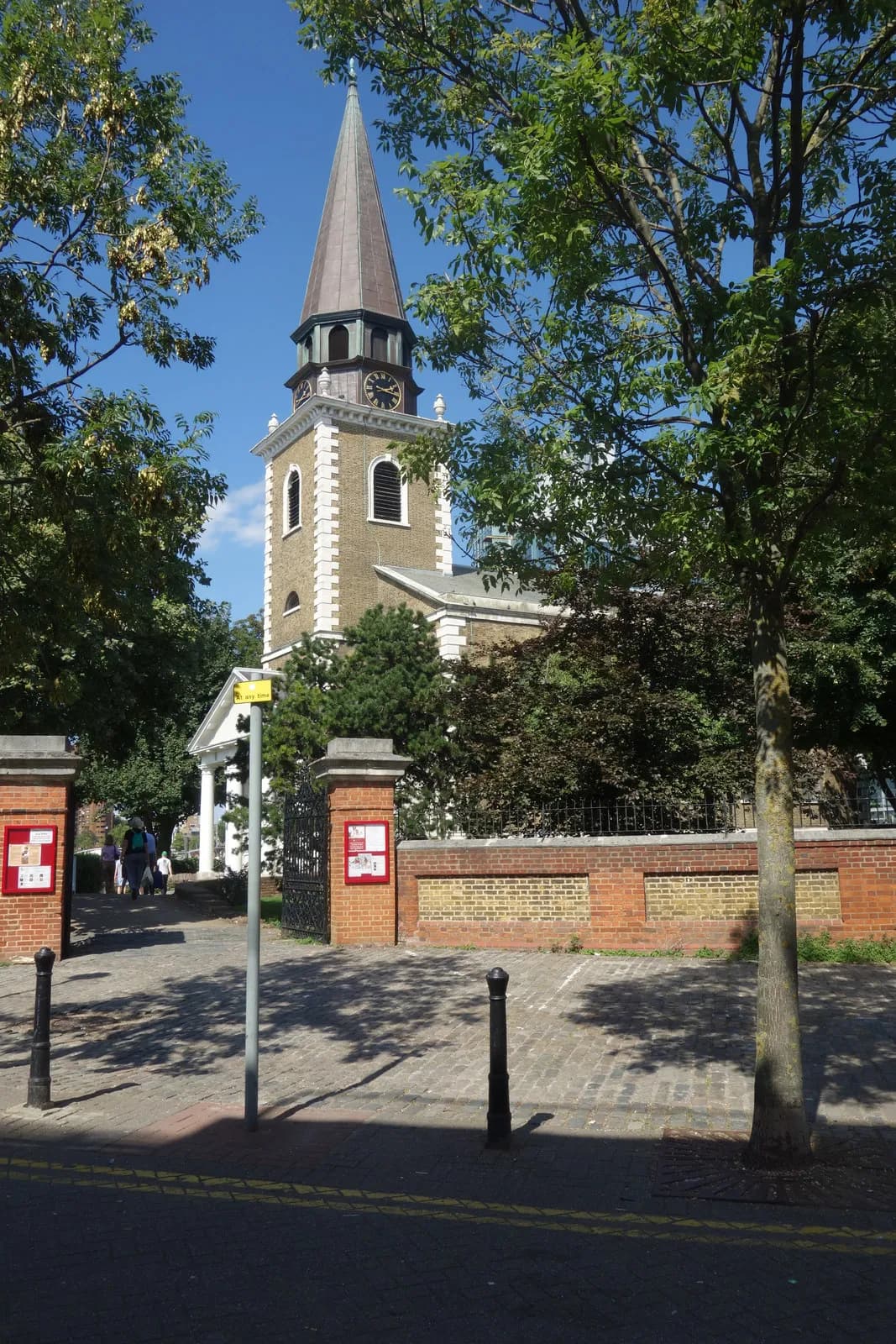
The autumn of 1647 saw one of the most remarkable discussions of democratic principles ever held in the English-speaking world take place within St Mary's Church in Putney. Over the course of ten days, soldiers and officers of the New Model Army gathered in this Wandsworth parish church to debate the fundamental questions of who should govern and on what basis.
A Gathering at Putney
In October 1647, the First English Civil War had ended with Parliamentarian victory. The New Model Army, established by Parliament in 1645 as a professional fighting force, found itself at a crossroads. Senior officers, known as the Grandees, sought to negotiate with King Charles I and restore order. Meanwhile, the rank-and-file soldiers, represented by elected Agitators, demanded far more radical reforms including universal male suffrage, regular elections, and equality before the law.
The Army Council convened at Putney from 28 October to 8 November 1647 to resolve these tensions. St Mary's Church, situated on Putney High Street beside the River Thames, provided the setting for these extraordinary deliberations. The church, which has served as a centre of Christian worship since at least the 13th century, would witness arguments that would influence democratic thought for centuries to come.
The Main Protagonists
Oliver Cromwell, second-in-command of the army and MP for Cambridge, chaired the debates. His principal ally was Henry Ireton, Cromwell's son-in-law and the principal architect of the moderate "Heads of Proposals". This plan advocated retaining the monarchy and House of Lords with veto power, while limiting suffrage to property owners.
Opposing them stood Colonel Thomas Rainsborough, the most senior officer to support the radical Leveller cause. Alongside him were elected Agitators including Robert Everard and Edward Sexby, representing the grievances of ordinary soldiers. William Clarke, the army secretary, employed stenographers to transcribe the proceedings, creating the only record of these debates.
The Poverty of the "Poorest He"
The debates reached their intellectual climax over the question of voting rights. Rainsborough articulated what would become one of the most celebrated statements in English political history:
"For really I think that the poorest hee that is in England hath a life to live as the greatest hee; and therefore truly, Sir, I think itt's cleare, that every man that is to live under a Governement ought first by his owne consent to putt himself under that Governement; and I do think that the poorest man in England is not at all bound in a strict sense to that Government that he hath not had a voice to put Himself under."
Ireton responded with the conservative counter-argument that would define the class divisions of the era: "no man hath a right to an interest or share in the disposing of the affairs of the kingdom... that hath not a permanent fixed interest in this kingdom."
The Agreement of the People
The Agitators presented "The Agreement of the People", a document that historian David Boaz of Encyclopaedia Britannica has described as "the first well-developed statement of libertarianism". Its provisions were remarkably progressive for the 17th century: universal male suffrage for men over 21 (excluding servants and those who had fought for the King), biennial parliaments with seats distributed by population, sovereignty vested in the House of Commons, freedom of conscience and religion, equality before the law, and an end to conscription.
The Grandees countered with the "Heads of Proposals", which sought to maintain the existing constitutional framework while addressing some soldiers' grievances. The fundamental divide was clear: the Agitators sought to rebuild England's government from first principles, whilst the Grandees aimed to preserve traditional structures.
Abrupt Conclusion
The debates were suspended on 8 November 1647 when the Grandees became concerned about military discipline. Three days later, King Charles I escaped from Hampton Court Palace, effectively ending any possibility of further negotiations. The radical proposals of the Agitators were ultimately defeated; Cromwell and the Grandees moved towards regicide, and Charles I was executed on 30 January 1649. Leveller-inspired mutinies at Bishopsgate and Banbury in 1649 were suppressed by Cromwell's forces.
Enduring Influence
Despite their immediate failure, the Putney Debates left an indelible mark on political thought. Geoffrey Robertson KC has noted that from Putney "may be traced the acceptance... of the idea that government requires the consent of freely and fairly elected representatives of all adult citizens". The Agreement of the People is widely recognised to have influenced the development of the United States Constitution.
The debates were largely forgotten until 1890, when William Clarke's shorthand transcription was rediscovered at Worcester College, Oxford. A.S.P. Woodhouse's 1938 publication "Puritanism and Liberty" brought these debates to wider public attention. Today, St Mary's Church bears an inscription quoting Rainsborough's famous words, and the church remains an active site of commemoration for this pivotal moment in democratic history.
Local Legacy
For residents of Wandsworth, the Putney Debates represent the borough's most significant contribution to world political history. The Grade II* listed church on Putney High Street, though substantially rebuilt after a fire in 1973, continues to occupy the site where these world-changing arguments unfolded. The parish of Putney, which formed part of Surrey until 1889 and now lies within the London Borough of Wandsworth, thus stands as the birthplace of ideas that would take nearly three centuries to fully realise in British law.